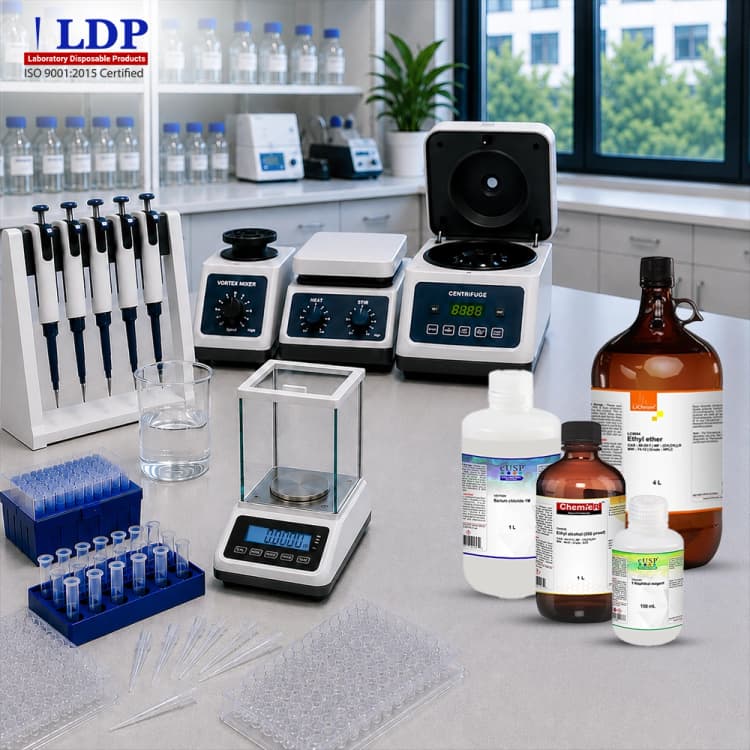
Choosing the Right Lab Supplies for High-Throughput Labs
On Monday, 14 September 2026
A high-throughput lab is fast-paced and accurate, efficient, and consistent. Whether a laboratory is performing research, diagnostics, pharmaceutical testing, biotechnology studies, or quality control operations, selecting the right lab supplies is an essential choice. Whether it is consumables, lab equipment, or high-quality reagents, all the components play a crucial role in ensuring a seamless operation in the laboratory.
This blog will focus on the use of laboratory consumables, laboratory equipment and laboratory reagents to achieve the most efficient, accurate and consistent workflow in high throughput laboratories. It also highlights the critical products that are available in the contemporary laboratories and the factors to be considered when choosing a reliable laboratory supply.
Understanding the Needs of High-Throughput Laboratories
High-throughput labs handle lots of samples every day. These laboratories require products with proven performance and consistency, that can be automated, and that do not compromise sample integrity during testing.
Laboratories must consider the following when assessing lab supplies:
Choosing supplies solely based on price can often lead to performance issues, increased waste, and workflow interruptions.
Selecting the Right Laboratory Consumables
In high-throughput environments, one of the most commonly used products are lab consumables. They are utilized on a daily basis in quite substantial quantities and quality and reliability are essential.
Some of the most commonly used laboratory consumables include:
1. Pipette Tips
Pipette tips are important apparatus for handling and transferring liquids. High-quality pipette tips provide added protection against contamination and provide accurate measurements. Laboratories are free to choose tips that best fit their pipetting and automation workflows.
2. Centrifuge and Microcentrifuge Tubes
Microcentrifuge tubes and centrifuge tubes are used extensively for sample storage, preparation, separation, processing and transport. Good sample integrity is maintained during centrifugation, storage and routine laboratory operations with high quality tubes having good sealing and chemical resistance. Choosing the right tubes helps reduce the risk of leaks, contamination and sample loss in high throughput operations.
3. PCR Plates and PCR Tubes
PCR Tubes and PCR Plates are key components for molecular biology and diagnostic laboratories and used for PCR amplification workflows. The uniformity of plate size and quality of material helps to assure accurate experimental results.
4. Serological Pipettes
A serological pipette is a common pipette for cell culture, reagent preparation, and transfer of liquids. Sterile, single wrapped products can help to streamline workflow.
5. Beakers
Beakers are a must-have lab consumable that are used for mixing, heating, making and transferring liquids. They come in a range of sizes and can be used for a variety of laboratory tasks and applications for more efficient sample handling in high throughput laboratories.
6. Flasks
Flasks are typically used for sample preparation, mixing, storage, and analytical uses. A good flask will guarantee excellent performance and deliver consistent and accurate results for many lab activities.
7. Cell Culture Products
Cell culture dishes, plates and other cell culture consumables are required for biotechnology, pharmaceutical and research labs. They are made with a consistent quality, which leads to reproducible cell growth and experimental results.
Laboratories can choose best quality laboratory consumables that minimize variability, repeat testing and boost productivity.
Selecting laboratory equipment that supports efficiency
Laboratory equipment is the foundation of high-throughput operations. To ensure accuracy while efficiently handling a high volume of samples, a laboratory needs reliable equipment.
Some of the major equipment categories are:
When choosing laboratory equipment, take into account things like throughput, durability, ease of maintenance and compatibility with lab processes.
Using lab equipment that is capable of automated processes can make a huge difference in productivity and reduce manual error in the laboratory.
The Importance of High-Quality Reagents
Reagents for laboratories are essential for analytical procedures, microbiology and molecular biology as well as quality control applications. Despite the use of the best equipment and best consumables, the results can still be affected with the use of inconsistent reagents.
Laboratories should prefer reagents which provide:
Laboratories can rely on trusted brands at Laboratory Disposable Products (LDP), that include ChemieR, cUSP Reagents, LiChrom, TriStains, BioTC and many more that can be used for a wide range of laboratory, analytical, chromatography, staining and research applications.
Reliable reagents for laboratories help obtain accurate results, adhere to quality standards, and follow testing procedures.
Why Quality and Consistency Matter in High-Throughput Labs?
Small differences can lead to significant time and expense delays in high-throughput labs. Standardizing lab consumables, equipment, and reagents throughout workflows results in reproducible lab processes and efficient operations. A laboratory supplier will maintain a stable supply chain for the laboratory, and provide quality products to the laboratory at whatever time they are needed.
Laboratories need to check suppliers for:
Why choose LDP?
Laboratory Disposable Products (LDP) is a trusted supplier of laboratory consumables, laboratory equipment, reagents and scientific products for research, diagnosis, biotechnology, pharmaceutical and industrial laboratories. Laboratory Disposable Products (LDP)'s extensive range of products from top-tier manufacturers and reputable reagent brands are designed to streamline, enhance, and ensure efficiency, accuracy, and reliability in laboratory operations.
Conclusion
High-throughput labs are not just about purchasing products; they're about purchasing the right products. It includes reagent selection, lab equipment and consumables selection, thereby allowing workflows to be accurate, efficient and repeatable. In rigorous lab settings, high-quality supplies can result in correct and accurate results, fewer errors and higher productivity. With investments in reliable laboratory equipment and the selection of a trusted supplier, laboratories can play a significant role in achieving operational excellence and meeting the increasing laboratory testing requirements.
Frequently asked questions (FAQs)
Examples of common laboratory consumables are pipette tips, microcentrifuge tubes, PCR plates, PCR tubes, beakers, flasks, serological pipettes, cell culture dishes and cell culture flasks.
The use of standardized products helps to minimize variation in testing, increases laboratory results reproducibility and lessens disruption to workflow, leading to more reliable laboratory results.
Quality reagents will offer stable results, minimize experimental variations, and enable accurate analytical and research procedures.
Throughput capacity, durability, maintenance needs, workflow compatibility and automation support are factors to consider while purchase laboratory equipment.
A trusted supplier ensures that the product is always available, simplifies and streamlines procurement, ensures consistency of product and streamlines inventory management.
Disclaimer: All the information on this blog is published in good faith and for general information purposes only. The information contained in this blog might be provided on an “as is” based on Wikipedia, Google, and other scientific articles. We are not liable for any injuries or damages for the use of the information. Please do your own research before you use this information for any purpose.