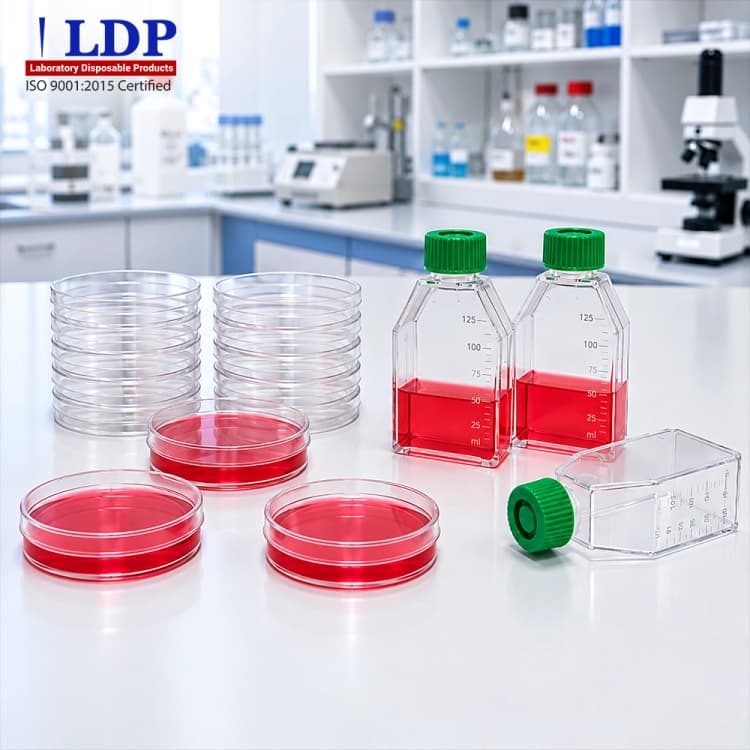
How to Choose the Right Culture Vessel: Petri Dish vs. Cell Culture Flask
On Wednesday, 14 October 2026
Table of Content
Selecting the appropriate culture vessel is an essential step in achieving reliable and reproducible laboratory results. Whether you are performing microbiological studies, culturing mammalian cells, or conducting pharmaceutical research, choosing between a Petri Dish vs Cell Culture Flask depends on your experimental objectives, sample type, and culture conditions.
Although both are widely used laboratory culture vessels, they are designed for different applications. Understanding their unique features will help improve workflow efficiency, reduce contamination risks, and support successful research outcomes.
What Is a Petri Dish?
A Petri dish is a shallow, circular container commonly made from high-quality polystyrene or glass. It is primarily used for growing microorganisms on solid culture media such as agar. Petri dishes provide a large, flat surface that allows researchers to observe colony morphology, isolate microorganisms, and perform microbial identification with ease.
Because of their simple design and accessibility, Petri dishes are a standard choice in microbiology laboratories, environmental testing, and educational institutions.
What Is a Cell Culture Flask?
A cell culture flask is specifically designed for the cultivation and maintenance of mammalian, insect, and other eukaryotic cells. Unlike a Petri dish, a flask features an enclosed design with a screw cap or vented cap that helps maintain a sterile environment while supporting proper gas exchange.
Cell culture flasks are available in multiple sizes, making them suitable for routine cell maintenance, cell expansion, and research applications.
Petri Dish vs Cell Culture Flask: Key Differences
When Should You Use a Petri Dish?
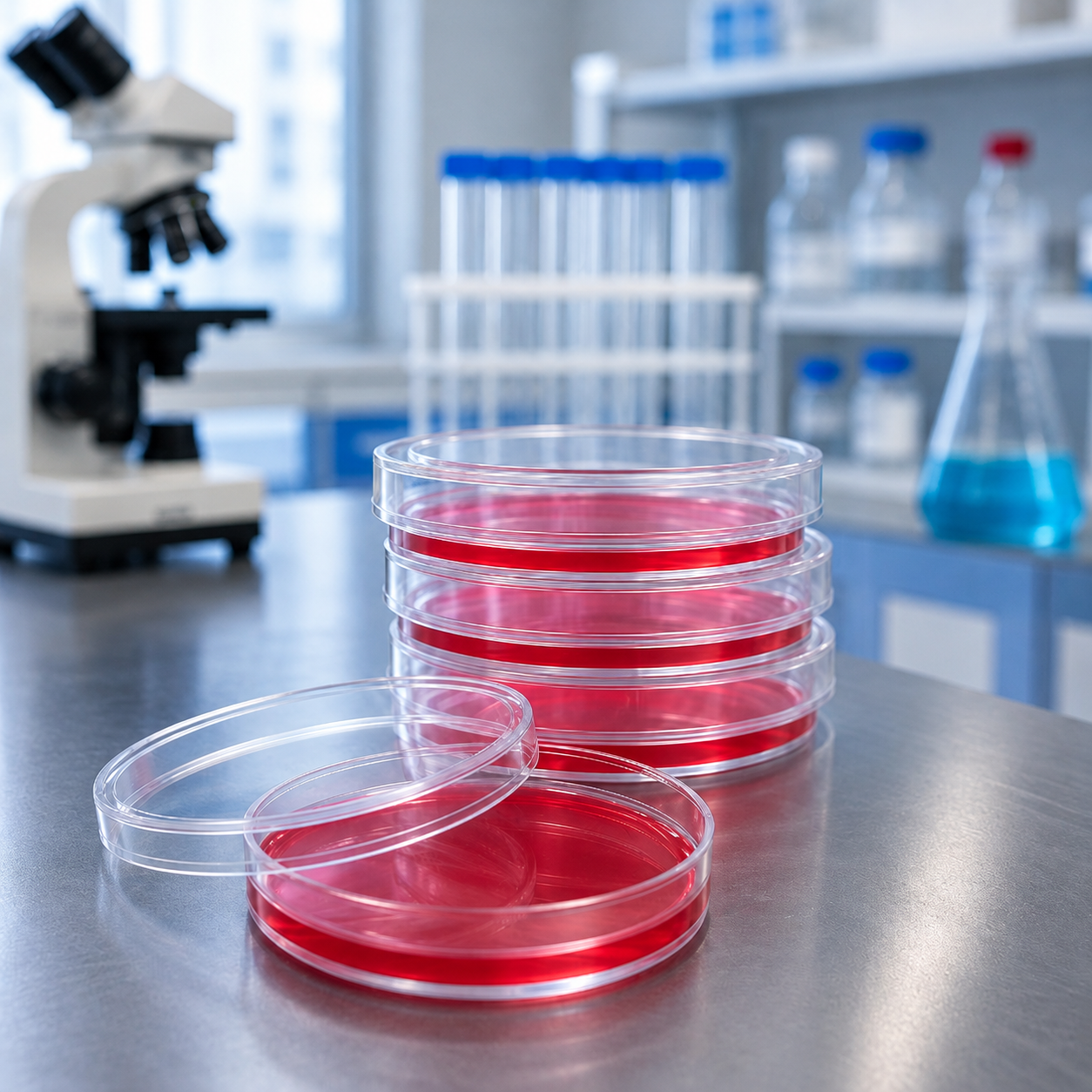
A Petri dish is the ideal choice when your experiment requires microbial growth on solid media or direct observation of colonies. Researchers commonly use Petri dishes for bacterial and fungal cultures, colony counting, antimicrobial susceptibility testing, environmental monitoring, and educational demonstrations.
Their flat surface also makes microscopic observation and colony selection straightforward, making them one of the most versatile laboratory culture vessels for microbiology applications.
When Should You Use a Cell Culture Flask?
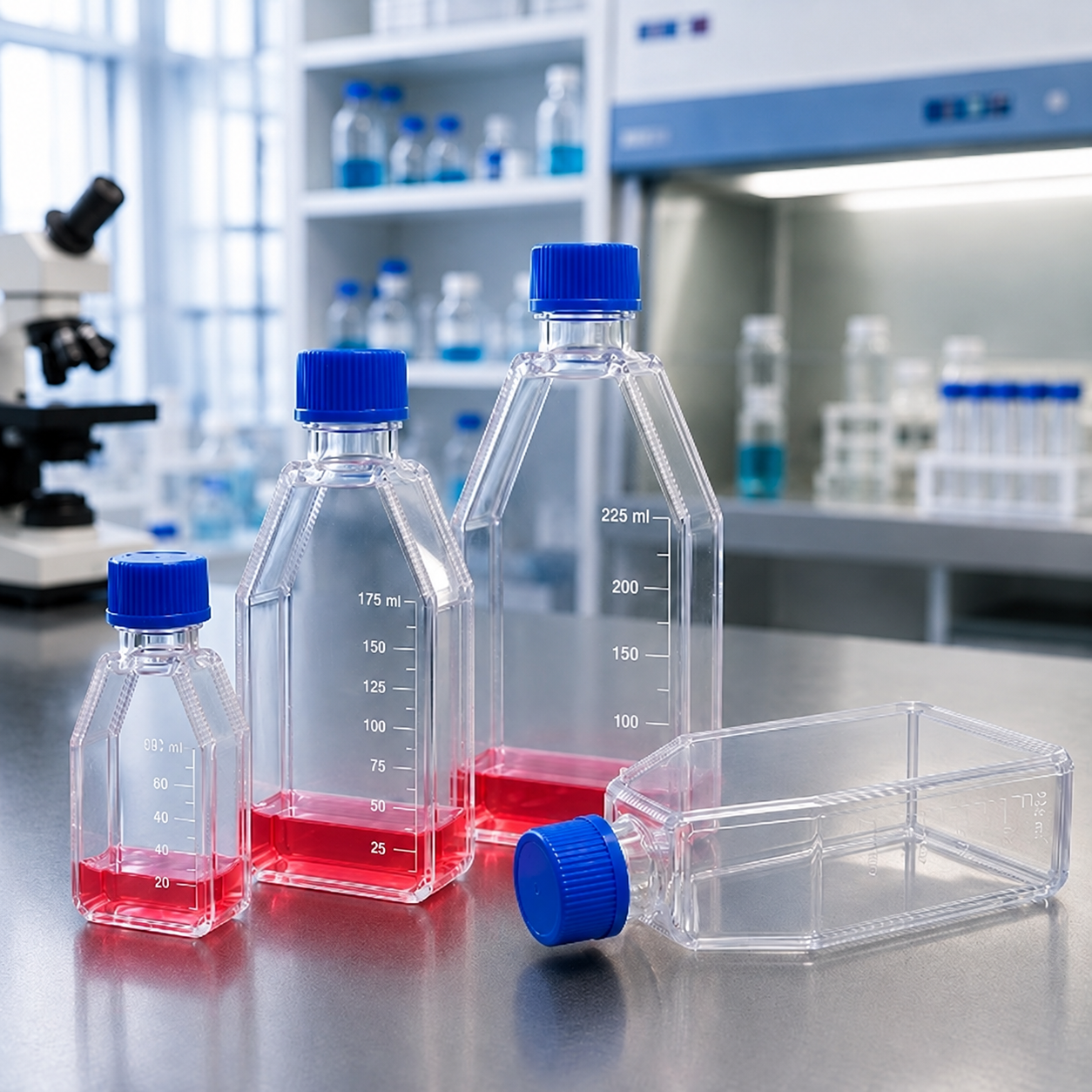
A cell culture flask is recommended when working with adherent or suspension cells that require sterile, long-term cultivation. The enclosed structure minimizes contamination while providing a controlled environment for healthy cell growth.
Cell culture flasks are widely used in biotechnology, pharmaceutical research, stem cell research, tissue engineering, and academic laboratories. They are particularly valuable for experiments requiring repeated media changes, extended incubation periods, and large-scale cell expansion.
Factors to Consider When Choosing the Right Culture Vessel
Choosing the right laboratory culture vessel depends on several important factors:
Understanding these considerations helps researchers select the most appropriate vessel while improving reproducibility and overall laboratory efficiency.
Why Quality Culture Vessels Matter
High-quality cell culture consumables contribute significantly to consistent research outcomes. Sterile, durable, and uniformly manufactured culture vessels reduce contamination risks, promote healthy cell growth, and improve experimental reliability.
Whether you need Petri dishes for microbiological analysis or cell culture flasks for mammalian cell research, selecting high-quality laboratory consumables ensures dependable performance throughout every stage of your work.
Why Choose LDP for Laboratory Culture Vessels?
LDP (Laboratory Disposable Products) offers a comprehensive range of high-quality cell culture consumables designed to meet the demands of research laboratories, biotechnology facilities, pharmaceutical companies, educational institutions, and diagnostic laboratories. Our Petri dishes and cell culture flasks are premium-quality materials, supplied sterile where required, and designed for reliable laboratory performance.
Whether you're expanding cell lines or performing routine microbial analysis, LDP (Laboratory Disposable Products) provides dependable laboratory consumables that support accurate, efficient, and reproducible research.
Conclusion
Choosing between a Petri Dish vs Cell Culture Flask depends on your research application. Petri dishes are ideal for microbiological studies and culture on solid media, while cell culture flasks are designed for the growth and maintenance of mammalian and other eukaryotic cells. Selecting the right culture vessel helps improve experimental accuracy, reduce contamination risks, and ensure reliable laboratory results. LDP (Laboratory Disposable Products) offers high-quality laboratory culture vessels to support a wide range of research applications.
Frequently Asked Questions (FAQs)
A Petri dish is mainly used for growing microorganisms on solid media, while a cell culture flask is designed for culturing mammalian and other eukaryotic cells in liquid media under controlled conditions.
Petri dishes are ideal for microbiology applications, including bacterial and fungal culture, colony isolation, antimicrobial testing, and environmental monitoring.
Cell culture flasks are best suited for long-term cultivation, maintenance, and expansion of adherent or suspension cell lines in research laboratories.
Cell culture flasks generally provide better contamination protection because their enclosed design and vented or filtered caps help maintain a sterile culture environment.
You can order certified, laboratory-grade Petri dishes and cell culture flasks online through LDP (Laboratory Disposable Products), with fast shipping and reliable quality across the USA.
Disclaimer: All the information on this news is published in good faith and for general information purposes only. The information contained in this news might be provided on an “as is” based on Wikipedia, Google, and other scientific articles. We are not liable for any injuries or damages for the use of the information. Please do your own research before you use this information for any purpose.