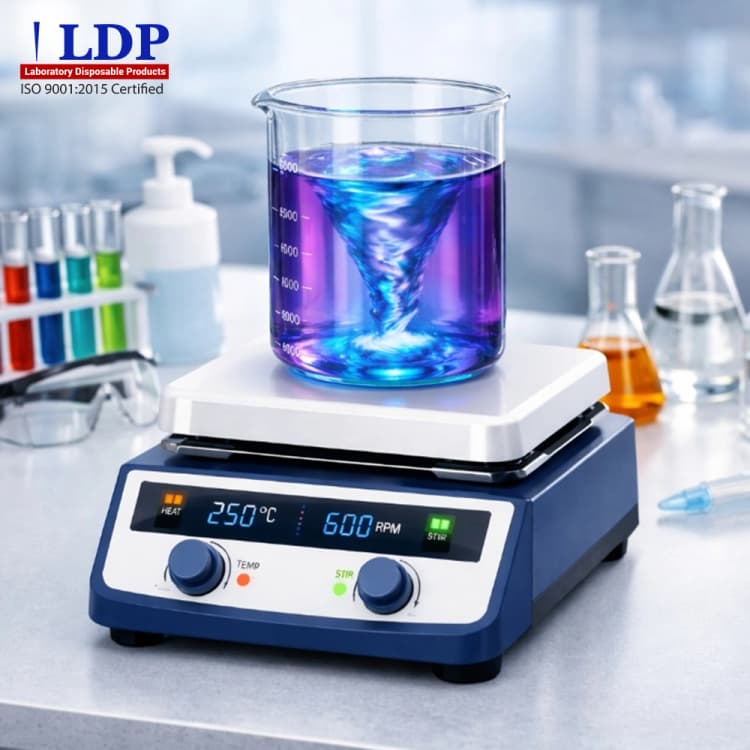
How to Choose the Right Hotplate Stirrer for Your Laboratory
On Monday, 06 July 2026
Selecting the right hotplate stirrer is crucial for ensuring accurate and efficient laboratory operations. Hotplate stirrer is an equipment that integrates both heating and mixing capabilities and thus is a must have equipment in a contemporary lab. Regardless of what field you are in, be it research, education or industrial, using the right hotplate stirrer can have great influence on the quality of your output.
In this guide, we are going to assist you in knowing how to select the right hotplate stirrer to use in your laboratory depending on your needs.
What is a Hotplate Stirrer?
A hotplate stirrer is a laboratory equipment that combines a heating surface, and a magnetic stirring device. The laboratory hotplate stirrer enables the user to both heat as well as mix liquids to ensure that the temperature and composition of the liquids is uniform. This renders a magnetic hotplate stirrer very useful in chemical reactions, sample preparation and mixing of solutions. The right hotplate stirrer enhances uniformity and manual efforts in laboratory processes.
Key Factors to Consider When Choosing the Right Hotplate Stirrer
1. Temperature Range and Control
Temperature control is among the most crucial points to consider when choosing the right hotplate stirrer. A digital hotplate stirrer device has finer temperature controls and is thus appropriate in sensitive experiments. A laboratory hotplate stirrer must also be able to evenly heat the surface to prevent uneven outcome.
2. Stirring Speed and Capacity
The right hotplate stirrer should have adjustable stirring speeds to handle different types of solutions. The magnetic hotplate stirrer has a powerful motor that allows it to mix even the viscous liquids effectively. Always ensure that you check the capacity of the hotplate stirrer to suit your laboratory needs.
3. Surface Material
Surface material is important in durability and chemical resistance. A laboratory hotplate stirring device with a ceramic top is very resistant to chemicals and the aluminum surfaces are more rapid to heat. The right hotplate stirring device should be selected based on the surface to guarantee long-term stability.
4. Safety Features
Heating equipment is dangerous and the safety is paramount. The right hotplate stirring device must come with such features as spill resistance and overheat protection. Higher-end digital hotplate stirrers frequently have safety alerts and automatic shut-off, making them safer than the entry-level ones.
5. Digital vs Analog Controls
The digital hotplate stirrer is more accurate and easier to use than the analogues. When it comes to precision, it would be highly advisable to invest in the right hotplate stirrer, which has digital controls. Nonetheless, simple laboratory needs can be met with analog options.
Types of Hotplate Stirrers
Understanding the different types helps in choosing the right hotplate stirrer:
The various types of laboratory hotplate stirrers are used in different applications, so when choosing the right hotplate stirrer, it is important to consider your workflow.
Benefits of Choosing the Right Hotplate Stirrer
There are various benefits of choosing the right hotplate stirrer:
A magnetic hotplate stirrer is especially useful in the laboratories where there is a need to prepare uniform solutions.
Common Mistakes to Avoid
While selecting the right hotplate stirrer, avoid these common mistakes:
Avoiding these mistakes ensures you select the right hotplate stirrer for long-term use.
Where Can I Buy Hotplate Stirrer Online in USA?
At LDP (Laboratory Disposable Products), we are dedicated to selling quality lab equipment that is precision, safe, and durable. We have a variety of hotplate stirrer solutions designed to fit the requirements of contemporary laboratories, such as research institutes, educational labs, and industrial centers. Be it a digital hotplate stirrer or a trustworthy laboratory hotplate stirrer, LDP (Laboratory Disposable Products) will guarantee high-quality performance and cost-efficient solutions. LDP (Laboratory Disposable Products) is dedicated to quality and hence your reliable partner in acquiring reliable laboratory equipment.
Conclusion
Proper selection of hotplate stirrer will provide proper results, improved safety and effective lab work. You can determine the right hotplate stirrer by considering important factors such as temperature control, capacity and features. The final outcome of investing in a right laboratory hotplate stirrer is increased productivity and consistency in your laboratory.
Frequently Asked Questions (FAQs)
In the laboratory, a hotplate stirrer is employed to heat and stir liquids together.
A digital hotplate stirrer offers a greater degree of temperature and stir speed control, enhancing precision.
A magnetic hotplate stirrer includes a stirring function, while standard hotplates only provide heating.
By cleaning and handling it regularly, you can prolong the life of your laboratory hotplate stirrer.
The important considerations when choosing the right hotplate stirrer are temperature control, safety, surface material, and capacity.
Disclaimer: All the information on this blog is published in good faith and for general information purposes only. The information contained in this blog might be provided on an “as is” based on Wikipedia, Google, and other scientific articles. We are not liable for any injuries or damages for the use of the information. Please do your research before you use this information for any purpose.