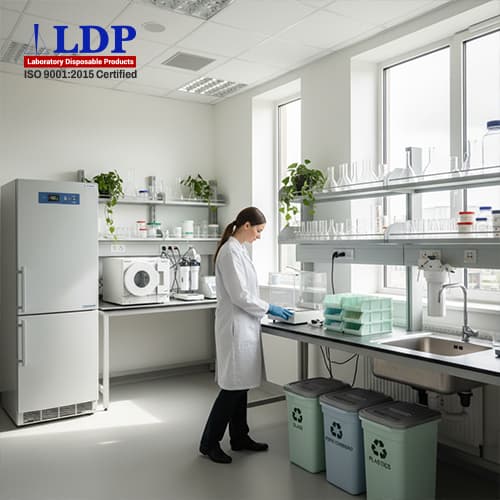
Simple Ways to Make Your Lab More Eco-Friendly: A Guide to Building a Sustainable Laboratory
On Monday, 12 January 2026
Running a modern laboratory involves high energy consumption, continuous utilization of chemicals, and huge waste generation. But with the growing need for environmental concern, most institutions and companies today are also focusing on building a sustainable laboratory that imposes minimal ecological footprint without sacrificing productivity and safety. Being green is not only environmentally friendly but also increases efficiency, saves money, and improves the reputation of your lab.
In this blog, we’ll explore simple ways to make your lab more eco-friendly, along with practical green lab solutions that can be adopted by research, educational, and industrial laboratories.
Why Build a Sustainable Laboratory?
A sustainable laboratory is designed to operate with reduced environmental impact by conserving energy, reducing waste, and adopting eco-conscious practices. Labs use almost 3-5 times more energy compared to similar-sized office spaces because of specialized equipment, air-conditioning systems, and round-the-clock power usage. By incorporating eco-friendly laboratory practices, you can slash operational expenditures dramatically while ensuring eco-friendliness.
Some of the most important reasons to transition into a sustainable laboratory are:
- Lower operational costs through energy-saving practices for sustainable laboratories.
- International standards and certifications for sustainability.
- Reduced carbon footprint through eco-friendly lab equipment .
- Better business reputation through evidence of your environmental stewardship.
Simple Ways to Make Your Lab More Eco-Friendly
Developing a sustainable laboratory does not have to mean grand overhauls. Small acts, if practiced consistently, can make a big difference. The following are some laboratory sustainability tips that can be adopted by all labs:
Reduce Energy Consumption
Another simple ways to make your lab more eco-friendly is to minimize energy. Lab equipment such as fume hoods, refrigerators, and incubators is some of the high-energy-consuming equipment present in labs. Conducting energy-saving practices for sustainable laboratories, such as using energy-efficient freezers , turning off idle equipment, and using LED lights, can be greatly impactful.
Choose Eco-Friendly Lab Equipment
Investing in eco-friendly lab equipment is a long-term investment in any sustainable laboratory. Energy-saving equipment, such as low-temperature freezers with efficient cooling systems, conserves electricity usage. Water-saving autoclaves also reduce resource usage without compromising performance.
Minimize Waste Generation
How to reduce waste in laboratories is crucial for eco-friendly laboratory practice. Labs generate waste in the form of single-use plastics, solvents, and other disposables. Recycling initiatives must be put in place, biodegradable consumables consumed, and reuse of glassware , where possible, is an excellent green lab solution.
Adopt Sustainable Procurement
Buying the best eco-friendly lab products for sustainability means your purchase is contributing to saving the environment. These include biodegradable tips for pipettes , recyclable packaging materials, and non-toxic cleaning solutions. By purchasing from sustainable laboratory manufacturing suppliers, you contribute to making a better lab world.
Cultivate Changes in Behavior
Reaching employees and students with eco-friendly laboratory practices is as important as the right equipment. Basic practices like turning off non-essential equipment, reporting a leak in water, and making recycling bins with easily viewed labels all contribute to laboratory sustainability tips that last.
Green Lab Solutions That Work
Green lab solutions ensure your sustainability efforts are working and functional. The following are some practices:
-
Equipment sharing schemes:
Reduce the necessity for duplicate purchases of equipment, saving money and energy.
-
Cold storage management:
Regular defrosting of freezers , maintaining temperatures at their best, and using economical models is in compliance with energy-saving practices for sustainable laboratories.
-
Electronic record-keeping:
Reduces paper usage and encourages a paperless process.
-
Water saving systems
Closed-loop cooling systems save water.
These green lab solutions render your sustainable laboratory energy-efficient and environmentally friendly.
Laboratory Sustainability Tips for Everyday Operations
Small steps create significant changes. Some laboratory sustainability tips for daily operations to make a positive change:
- Use motion-sensor lights to minimize excessive use of energy.
- Label hazardous and non-hazardous waste containers for segregation.
- Refillable bottles rather than disposable bottles.
- Purchase the best eco-friendly lab products for sustainability that comply with international eco standards.
- Encourage carpooling, cycling, or public transport for the lab workers to lower the overall carbon footprint of the lab.
These laboratory sustainability tips integrated, will have your company actively working towards a greener future.
Advantages of Green Laboratory Practices
The advantages of eco-friendly laboratory practices extend way beyond saving the environment:
- Reduced electricity and water bills.
- Enhanced laboratory safety through minimizing hazardous waste.
- More efficient research with newer, eco-friendly lab equipment .
- Enhanced reputation as a socially responsible company.
Enforces simple ways to green your lab, and your company is a sustainability frontrunner.
Best Eco-Friendly Lab Products for Sustainability
At LDP (Laboratory Disposable Products), we provide a comprehensive range of the best eco-friendly lab products for sustainability, from biodegradable consumables to energy-saving laboratory equipment. Ideal product selection ensures your laboratory processes balance with contemporary environmental objectives without negatively impacting safety and efficiency.
By using eco-friendly laboratory equipment and materials, you are investing in the future of your lab and the world.
Conclusion
Developing a sustainable laboratory is a combination of technology, planning, and culture transformation. With the adoption of sustainable laboratory practices, installing green lab solutions, and adhering to laboratory sustainability tips, you can develop an environmentally friendly and productive working space. It starts with adopting eco-friendly lab equipment , educating your personnel on how to reduce waste in laboratories, to taking all small steps.
With greater awareness of climate change, now is the time to focus on what you can do to green your lab and choose the best eco-friendly lab products for sustainability. At LDP , we’re committed to assisting you in finding your path to a safer and greener lab.
Frequently Asked Questions (FAQs)
A sustainable laboratory is a lab that adopts eco-friendly laboratory practices, energy-saving systems, and green lab solutions to reduce environmental impact while being efficient in operation.
The simplest ways to make your lab more eco-friendly include reducing energy usage, recycling waste, adopting eco-friendly lab equipment , and carrying out staff awareness programs.
You can learn about reducing waste in the lab by using recyclable consumables, segregating chemical waste, and buying reusable glassware .
Energy-saving practices for sustainable laboratories reduce the cost of operation, extend the life of the equipment, and the amount of carbon emitted is significantly reduced.
You may purchase best eco-friendly lab products for sustainability from reliable vendors like LDP , which sells chemicals, consumables, and eco-friendly lab equipment from different brands.
Disclaimer: All the information on this blog is published in good faith and for general information purposes only. The information contained in this blog might be provided on an “as is” based on Wikipedia, Google, and other scientific articles. We are not liable for any injuries or damages for the use of the information. Please do your research before you use this information for any purpose.